
by Bhumika Saraswati
The following images and descriptions were originally published online on the NYU libraries website. They feature Bhumika Saraswati’s photography from Unequal Heat: Climate, Gender, and Caste in South Asia.
Heat is rising temperatures; but it isn’t just that. It is also a metaphor for a simmering rage, born from generations of subjugation. Women, especially those of us deemed “untouchable” and outcast, have felt this heat intimately. Stories of Dalit and Adivasi women—two communities marginalized within and oppressed by the rigid caste system—intersect in their shared struggle against systemic violence and exclusion. Though these women are crucial to our food systems and ecological balance, they remain underrepresented in climate discourse and in almost every other phase of life in India.
I photograph to bear witness to their resilience—in protests, agricultural fields, and forests. These photographs are evidence of a lived reality that is too often overlooked, capturing the quiet power and fierce spirit of those at the forefront and intersection of caste, gender, and climate injustice. Each photograph becomes part of an archive—a testament to a reality that, no matter how systematically hidden, insists on being witnessed and respected.
This Is A Protest.

Why do protest visuals have to look a certain way? Can’t we centre love, sisterhood and at times even survival, and register life itself as a sign of protest. Our communities have been stereotyped, and our resources looted for far too long now. Extraction—of our resources, our bodies, and our knowledge—only tell a part of the story. Dehumanized visuals that we have been forcefully subjected to deny us of our holistic reality. And we refuse such dehumanisation.
This photograph was taken in Central India’s Chhattisgarh at one among the 40 ongoing protest sites where the villagers, mostly indigenous and Dalit women, protest the illegal mining of iron from within their forests.
This is also the time when in India’s capital, relentless headlines detail heat wave fatalities as merely “a 100 People Die in Heatwave” or “Extreme Heat Kills Hundreds.” The profound human narratives often fade into statistical obscurity. Who are these individuals succumbing to the sweltering temperatures in the Global South, in our cities, and across our villages? What stories do they carry, and what societal injustices push them to the forefront of this climate crisis?
The unsettling truth emerges: the victims predominantly hail from marginalized communities, bearing the intersectional weight of caste, gender, indigeneity and economic disparity. The impact of heat on our bodies is far from equitable.
The heat is not equal to us all.
* * *
(The title for this specific chapter is loosely inspired by a Christmas gathering we had in 2023, in Hyderabad at Percy Tabitha’s home—a day that felt like a protest in itself. Ever since, I’ve carried that feeling, sentiment and the very idea of a protest, with me. This is a Protest is also the title of Percy’s photo-book on the Tsundur Massacre, in southern India’s Andhra Pradesh where eight Dalits were murdered by “upper-caste” Reddy men, allegedly with police complicity.)
The Inequality of Heat
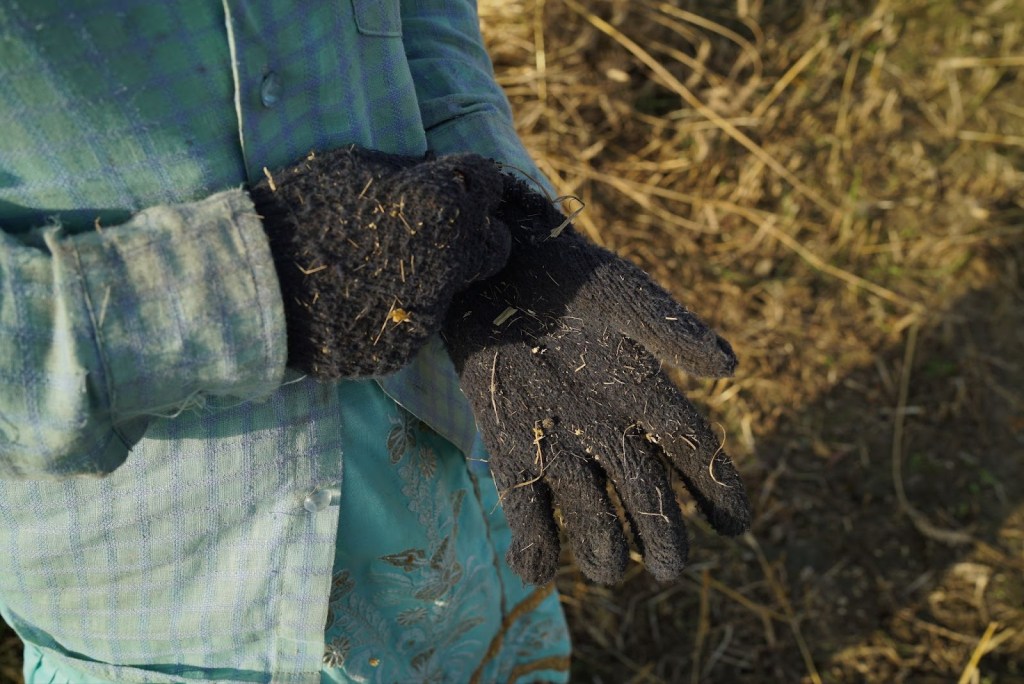
Sudharshana, 19, a Dalit woman and farm labourer toiling the land in over 50 degrees celsius (122 degrees fahrenheit) temperatures, protects herself from the scorching heat in India that kills hundreds every year. The winter gloves act as a reminder that we fail to provide our own “low caste” communities with safety gears, or early warning signals, because some lives (especially those of the “untouchable” women) are more disposable than others.
In South Asian academia, where the discussions on environmental sustainability echo, there exists a curious reluctance—a hesitancy to peel back the layers of complexity and acknowledge the stark reality of caste dynamics. Perhaps it stems from discomfort, a fear of stirring the hornet’s nest of social hierarchy, or a misconception that environmentalism is a neutral ground untouched by the tendrils of caste and indigeneity.
However, as we delve into the depths of environmental issues plaguing the Indian subcontinent, it becomes increasingly evident that omitting the discourse on caste is akin to trying to understand a puzzle with a crucial piece missing.
Caste, deeply entrenched in the social fabric of India for centuries, is not merely a relic of the past but a living, breathing entity that permeates every aspect of society, including its environmental landscape. From access to resources to patterns of land use, caste influences every step of the environmental journey, often silently dictating who benefits and who bears the brunt of ecological degradation. To truly unravel the complexities of environmental challenges in India, we must confront this reluctance head-on.
Thirsts and Thresholds
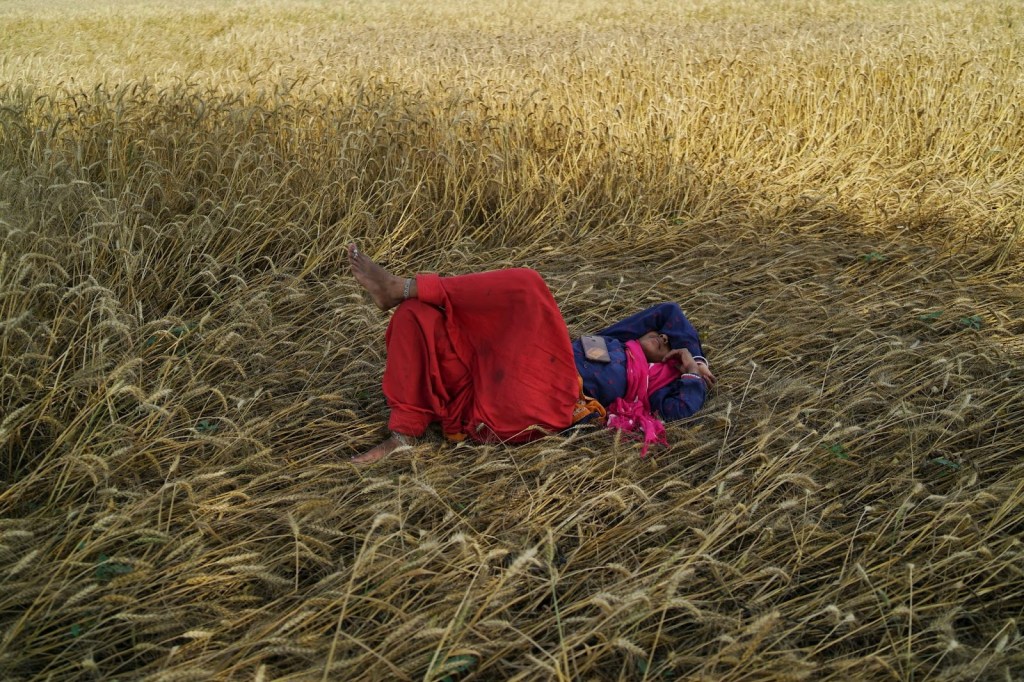
Consider someone sitting in an air-conditioned room and compare their experience to that of a Darshana, Dalit woman toiling in the sun, working someone’s field for a daily wage. The difference is stark. In these fields, even access to water is unequal. In the realm of environmental discourse, water is often romanticized as the nectar of life, a symbol of purity, and a source of natural beauty. However, for Dalits in India, water carries a burden far heavier than its life-nurturing properties—it is a stark reminder of caste-based discrimination and exclusion.
Imagine fetching water not as a routine chore but as a journey fraught with the fear of facing discrimination and violence. For Dalits, accessing water sources reserved for upper castes can result in ostracization, verbal abuse, or even physical assault. The simple act of quenching one’s thirst becomes a daily struggle.
For Dalits, water is not merely a resource but a reflection of the deep-rooted inequalities that pervade society. It is a reminder of their marginalized status, and that they are denied access to basic necessities that others take for granted. In the absence of equitable distribution and access, water becomes a symbol of oppression—a burden borne solely on the shoulders of those deemed lower in the caste hierarchy.
When I ventured into a remote village in Uttar Pradesh, North India, I met Kamlesh, another Dalit woman laborer. Her voice was frail but resolute as she recounted her struggle: “I have been sick for at least three days now because of this heat. I have lost work and daily wages because of it. I earn Rs. 350 ($4) per day working as a laborer on farms. In the past four days, I’ve lost over Rs. 1000 (around $11) due to the heat and related sickness.”
Women on the Frontlines
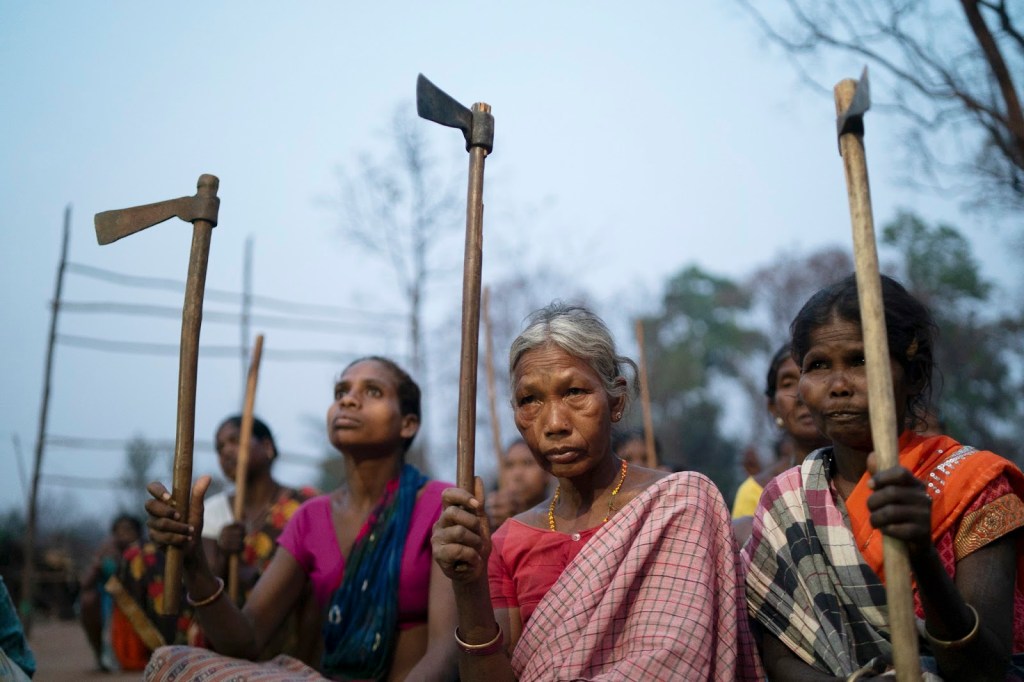
Adivasi (indigenous) women in Abujhmad forest showing their everyday tools at a protest site against illegal mining and “fake encounters” and arrests in Central India’s Bastar region, India.
These makeshift protest sites resemble small villages built from forest materials, bamboo sticks, wood, and dry grass, housing hundreds of people from at least eighteen villages. Much like the farmers’ protests in India, the community here cooks collectively and supports one another. However, unlike the widely publicized protests in Delhi, these demonstrations in Bastar receive little to no media attention. Taking place in one of India’s most militarized zones, even more so than Kashmir, these protestors face an environment of escalating militarism and industrial encroachment.
Climate change exacerbates this crisis, pushing vulnerable groups deeper into poverty, destroying the only thing they call home – their forests.
During multiple interviews with at least a dozen people, the members from various Adivasi/tribal communities reiterated that they want their collective issues foregrounded over any individual tribal identities. The slogan “एक तीर एक निशान, सारे आदिवासी एक समान” (“One arrow, one target, all Adivasis are equal”) perfectly captures this sentiment. Historically, the strategy has used divide-and-rule tactics to fracture already marginalized groups, creating further divisions.
This slogan is a powerful response, emphasizing solidarity and unity among all marginalized. This situation is similar to the Scheduled Castes, the Dalits, where subcategorization of Dalits by politicians often undermines their historical identity. Both Adivasi and Dalit communities believe these distinctions are made to exploit and benefit by dividing communities within often for political and corporate interests and benefits.
Sisterhood, Smiles and an Instagram Reel
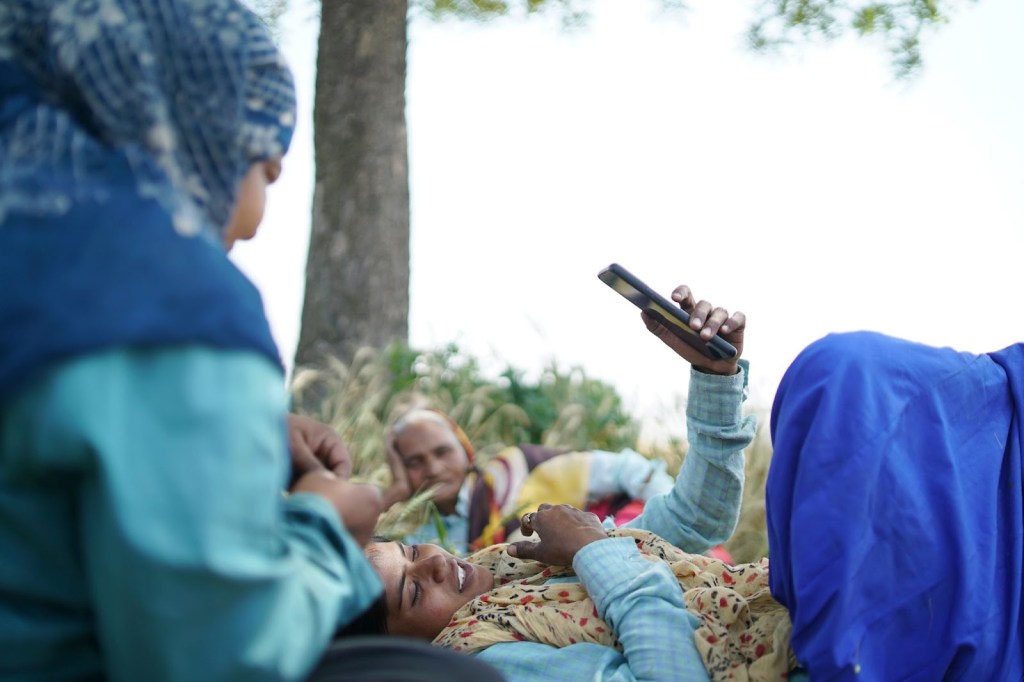
Sometimes, our smile itself is an act of resistance in a system rigged against us. Even our smiles, in the face of adversity, become symbols of our ongoing struggle. Our clothings, our ability to comprehend complex oppressive structures in dominant-English or regional languages, the way we speak our truth to power—everything enabling us to express our truth and fight for it embodies our resistance.
This is a portrait of a Dalit woman working, resting, creating Instagram reels, and laughing.
I would say—for a Dalit woman to claim her identity, be out there, to merely laugh, fight for self—breaking all stereotypes that dominant caste and community people have been forcing upon us by only telling stories of our pain. In wake of it all, to own your charm and intellect, and fun, and be out there is a win in resistance itself.
For me, the act of documenting and clicking this imagery is a form of resistance itself.
Portrait of a Climate Leader
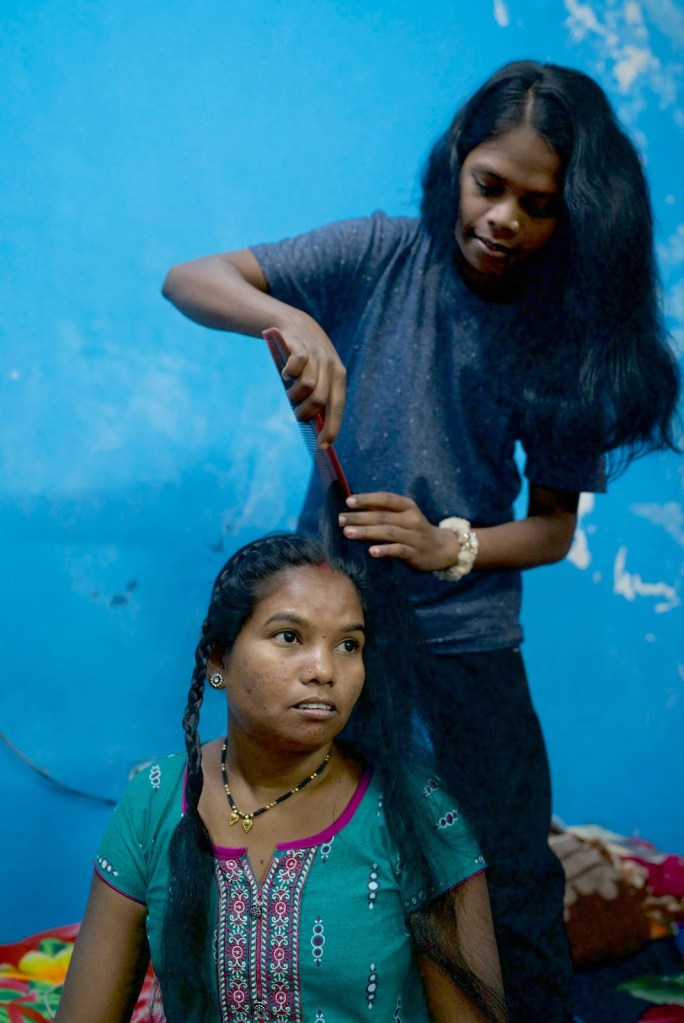
Why do so-called “upper-castes”, who dominate climate activism—and practically all other fields (journalism, law, healthcare)—in India and globally, not see our community leaders as climate leaders, activists, and experts in their own right?
As resistance to brahminical colonisation of knowledge and evidence production, this is a portrait of Poonam Jetty, a resilient Adivasi woman, climate activist, and leader who was (sometime back) on a crucial one-day trip to Delhi, embodying the spirit of resistance against multiple proposed iron mines in their villages in Gadchiroli, Maharashtra, India.
Jetty’s husband, Laxman Jetti, alongside 20 others were forcibly taken away by the police in a helicopter and their phones seized. The police also vandalized small huts and shelters at the protest site. Videos emerging from the incident reveal the police lathi-charging (brutalized) protestors and reprimanding those who attempted to document police action.
As a representative, Poonam articulated the concerns of peaceful protest that unfolded in Gadchiroli, spearheaded by the Madia-Gond Adivasi community, one of the three Particularly Vulnerable Tribal Groups in the region, aimed to oppose establishment of mines and the unjust repression that follows in its wake.
The epicenter of their grievances is the Lloyd’s iron-ore mine, whose severe impact reverberates through Surjagarh. Many decisions bypassed necessary consultations with local gram sabhas, violating the Forest Rights Act 2006 and the Panchayat Extension to Scheduled Areas (PESA) Act 1996. Many expanded their mining operations from 3 to 10 million metric tonnes per year, encroaching on Adivasi lands designated for community forest rights.
In June 2023, six new mines covering 4,684 hectares were leased to five companies. If allowed to operate, these mines could displace at least 40,900 people.
Repercussions are multifaceted, ranging from the pollution of water sources to the engulfing of agricultural fields in silt, rendering them unproductive. The health of the community is at stake.
Poonam’s single-day Delhi trip for me, becomes a microcosm of a larger narrative, where environmental justice, social equity, and the preservation of Adivasi identities intersect. The echoes of her and the community’s peaceful on ground protest resonate not just as a local struggle but as a call for broader societal awareness and collective action against the detrimental consequences of such exploitation that multiple marginalized communities at the moment face.
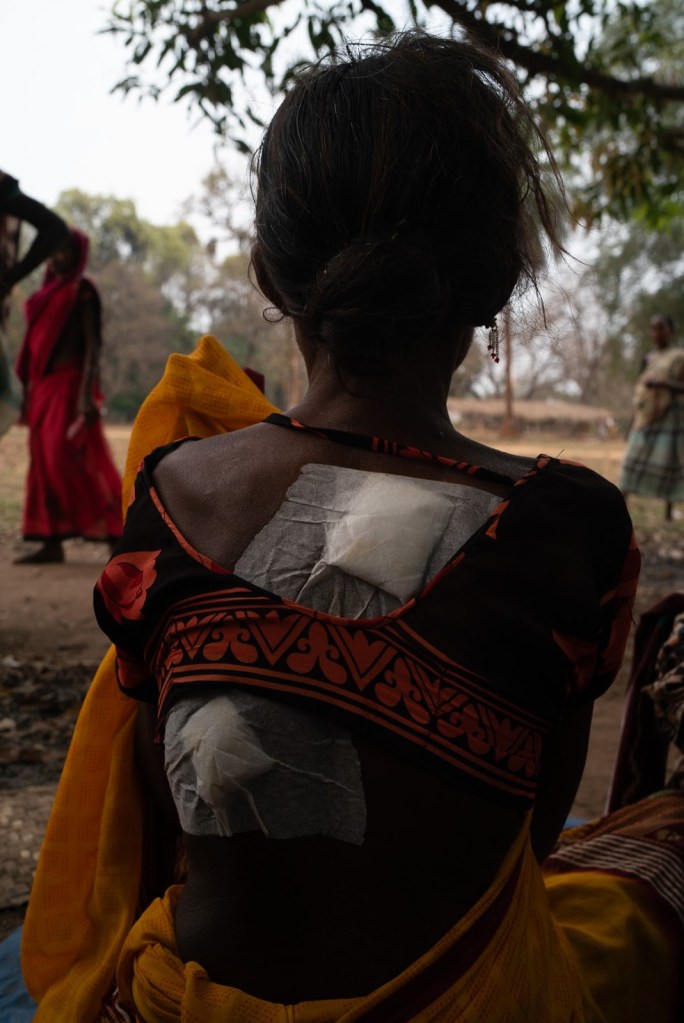
The bullet went through her and she survived. They didn’t think she would. But she lived. Raje Oyam, 44, was shot in Central India’s Chhattisgarh where there is incessant mining. The bullet hit her as she tried to protect her child.
Currently in India, being a tribal woman is in itself an act of resistance. To access and mine Adivasi lands, the state employs any means necessary: establishing police camps deep within Adivasi territories, threatening and committing acts of sexual violence, executing extrajudicial murders, and incarcerating those, like Suneeta Pottam and Hidme Markam and Soni Sori (in the past) who dare challenge the status quo.
The extraction, use, and management of geological resources like minerals, water, and land have been shaped by colonialism, brahminism, capitalism, racism and casteism. This has created fractures in the relationships between living communities and the Earth’s resources, perpetuating inequality and environmental degradation.
For example, resource extraction processes are not only often unsustainable, but also at the cost of the displacement of communities that have historically lived within and sustained these forests. Industrial processes poison landscapes and exacerbate climate change. All of this disproportionately impacts our communities, placing us in the context of global blackness.
To Bear Witness
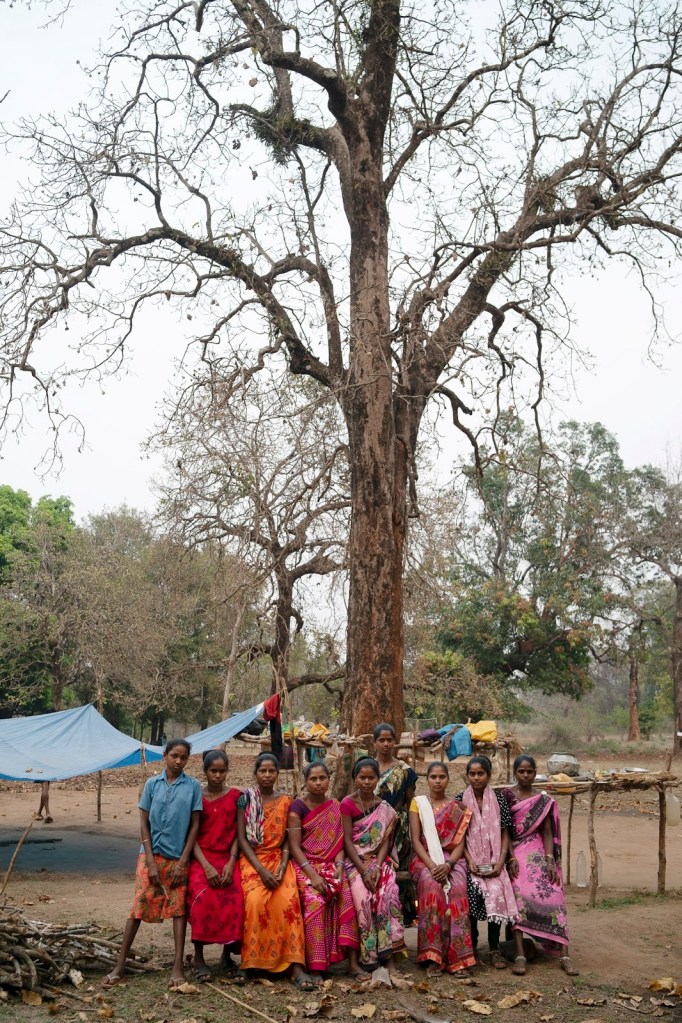
These stories are testament to the fact that climate justice cannot exist without social justice. The intrinsic heat, our rising temperatures, the cutting of forests, and the looting of resources, does not impact does not impact us all equally. It disproportionately burdens those already marginalized by brahminical structures and the society it produces.
These women, who toil in the sun for a meager wage, fight for their land and water and represent the human face of the climate crisis. They endure the brunt of the heat, their lives are a daily struggle for survival. Their stories remind us that the fight against climate change is also a fight for equality and justice.
As I continue my work, photographing and documenting, I am driven by the urgency to make their voices heard. Our voices heard. In their resilience and strength, I see the embodiment of a powerful truth: there can be no climate justice without social justice. And until we recognize and address the deep-seated inequalities that fuel this crisis—caste system, patriarchy and class struggle—the headlines we see will continue to obscure the human cost of our challenging times and changing climate.
While on this visual documentation project, I have come to realize that even the word “heat” is more than just rising temperatures. It is a metaphor for simmering rage. A potent force. For centuries, women, particularly those from marginalized and oppressed communities, have known this heat intimately. It is not merely about the weather, rising temperatures, or deforestation, but a deep-seated rage—a fury borne from centuries of subjugation (from brahminical patriarchy and colonization). For those of us relegated as “untouchable” or “outcastes,” heat embodies more than just discomfort; it is a symbol of our resistance in the face of systemic oppression.
This work is a symbol of my resistance.
 Heat South Asia